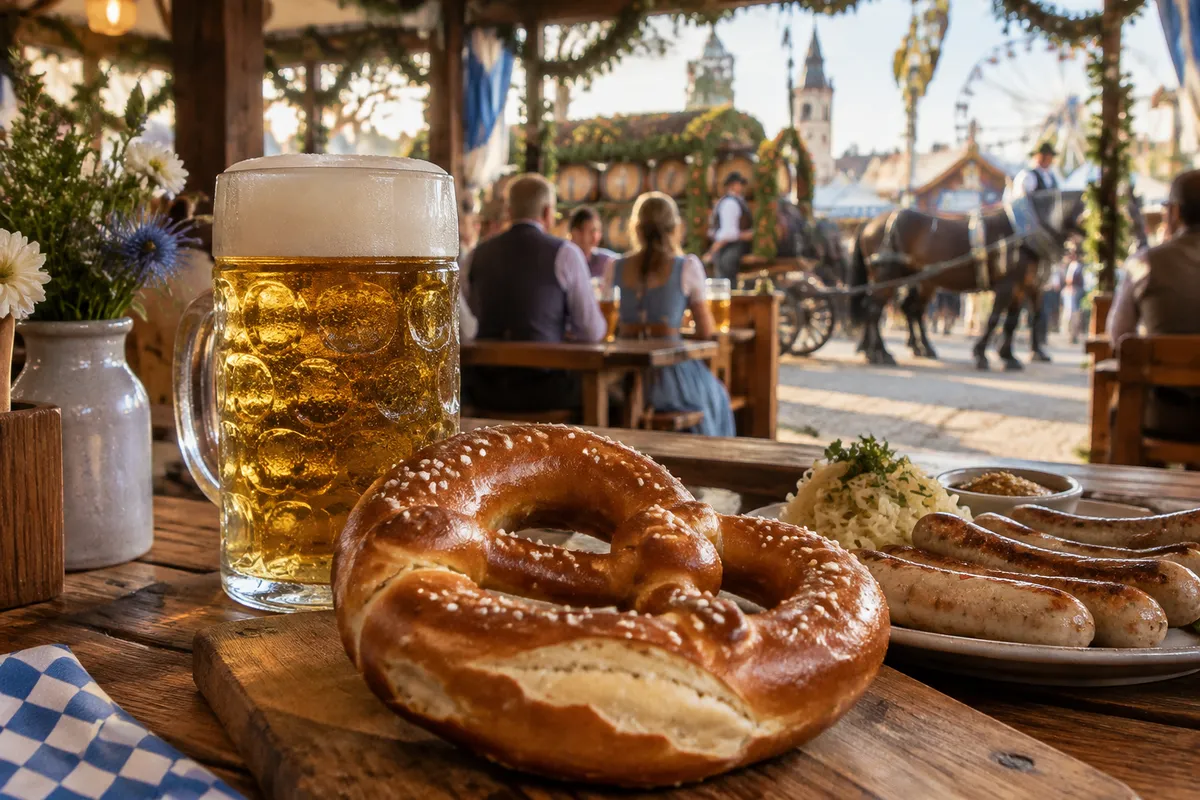
A beer you know well tastes different in the city that made it famous. A whisky you pour at home means something else once you've stood in the region where it's made. That pull toward the source is the idea behind a Forbes piece on what it calls the Oktoberfest effect, and it gives you a useful way to plan your next food trip.
By the end of this article, you'll have a simple framework for choosing destinations where the place itself is part of the flavor, plus a few ways to make a trip more than a checklist of famous names.
What the Oktoberfest effect means
Forbes looks at how travelers are prioritizing food and drink experiences tied to a specific place, using Munich's Oktoberfest and whisky tourism in Scotland as its two anchor examples. The core argument: provenance adds value, authenticity and emotional pull. Provenance here means three things together:
- Where something is made
- Who makes it
- The culture that surrounds it
Notice that the product alone isn't the whole story. The setting, the people and the customs are what turn a drink or a dish into a reason to buy a ticket.
Why Oktoberfest works as a blueprint
Oktoberfest is a useful model because the beer is only one part of the draw. The event is built around a place and its traditions, which is why it works as a template for experience-led tourism. Travelers aren't just buying a drink. They're stepping into the setting where that drink belongs.
If you're judging whether a destination offers that kind of experience, ask yourself:
- Is the food or drink tied to this specific place, not just sold here?
- Are there local people and traditions you can actually engage with?
- Would the experience lose something if you moved it somewhere else?
If the answer to the third question is yes, you've likely found a place worth traveling for.
Scotland's whisky trail: provenance you can visit
The second example in the Forbes piece is whisky tourism in Scotland. It makes the same point from a different angle. Instead of one festival, you have a whole region where the product's origin story is the attraction. Making the trip lets you connect a bottle to the landscape and the culture behind it.
When you plan something similar, whether it's whisky, cheese, wine or olive oil, build your itinerary around the producing region rather than a single stop. Group your visits geographically so you can see how the place shapes what's made there.
Why provenance makes things feel more premium
The piece's broader point is that origin gives food and drink extra value. The same product can feel more special when you know where it comes from and who made it. Forbes also notes that brands, regions and creators are leaning into origin stories to stand out in crowded food, drink and travel markets.
That's useful to know as a traveler. An origin story can be real and rich, or it can be a marketing line. A few ways to tell the difference:
- Look for specifics: a named place, a named maker, a described method.
- Check whether you can visit, taste or learn on location.
- Notice whether locals actually eat or drink the thing, or only visitors do.
How to plan a trip around provenance
Here's a practical way to put this into action.
Pick one product, not ten
Choose a single food or drink you already enjoy and trace it to its home region. A focused trip tends to be more rewarding than a scattershot tour of everything famous.
Go where the culture is, not just the production
The Forbes argument rests on the culture around a product as much as the product itself. Look for markets, festivals, local dining customs and everyday places where people eat and drink it. Those are the settings where provenance comes alive.
Meet the makers when you can
Because who makes something is part of provenance, favor visits, tastings and meals that put you in contact with producers or people who know the craft.
Bring the place home with a simple recipe
You can extend the trip in your own kitchen. Pick a dish from the region you visited, buy the key ingredient locally if you can, and cook it the way the people there do. Even a basic version is more meaningful when you know its story. A Bavarian-style beer-hall spread of pretzels, mustard and cheese, for example, is easy to assemble at home, and you can pair it with a beer from the region to keep the connection going.
Why this matters beyond the trip
Forbes frames culinary travel as booming because people want more meaningful, place-based experiences instead of generic tourism. That shift is good news for you. It means more destinations are building visits around real local traditions, and more producers are open to sharing their stories.
Your next step
Pick one food or drink you love, find out exactly where it comes from, and start your trip planning there. The best itinerary often begins with a single taste you want to understand at the source.