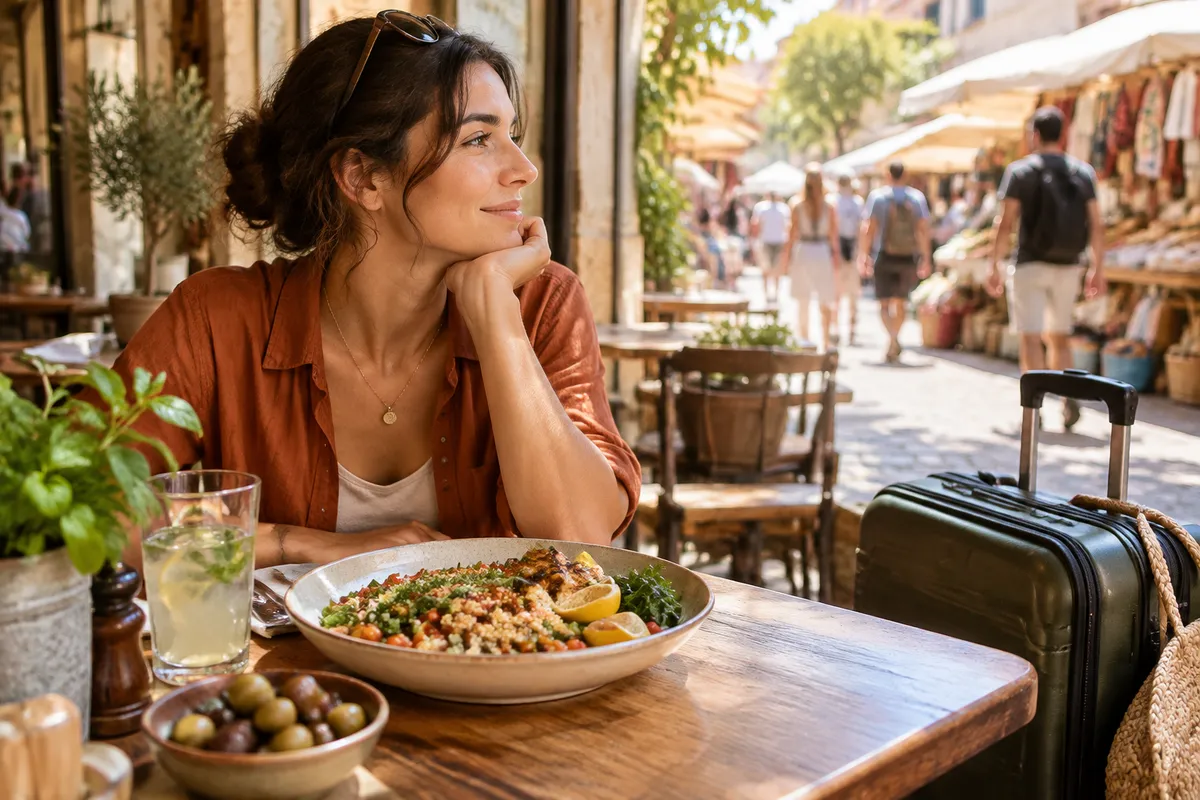
A food trip starts well before your first meal. If you land tired, stressed, or missing a bag, the market stall you planned your week around loses some of its shine. A video from experienced flyers lays out a dozen smart travel habits. The source gives full detail on ten of them, so these are the ten, framed for people who travel to eat.
Pack so you can carry your finds home
Roll your clothes and use your shoe space
Rolling clothes instead of folding saves space, reduces wrinkles, and lets you see everything at a glance, per the video. It also suggests tucking small items into the space inside your shoes. For food travelers, the payoff is room. Every inch you recover is an inch for a jar of regional spice or a tin of something local on the way back. (Check your airline's and destination's rules on bringing food across borders first.)
Handle liquids the right way
Transfer liquids into proper-sized containers and keep them in a clear bag. That keeps you moving through security instead of repacking at the tray. If you plan to bring back sauces, oils, or other liquid souvenirs, this is a good reason to plan checked luggage rather than a carry-on only trip.
Track your checked bag
The video recommends small tracking devices for checked luggage. If your bag holds fragile edible gifts or your only good walking shoes for a food tour, knowing where it is brings real peace of mind.
Choose your seat and flight time with care
Pick a seat by aircraft type and row
Researching the aircraft type and seat location before booking prevents hours of discomfort, according to the video. Don't choose on price alone. A few minutes of research can mean arriving with your appetite intact instead of cramped and cranky.
Fly early when you can
The video says early morning flights tend to have smoother air than midday flights because of cooler temperatures, and it also advises choosing flight times to avoid turbulence and delays. Smoother air is kinder to the stomach, which matters when your first meal is a plan, not an afterthought.
Skip the boarding scrum
Stay seated until your group is called. That reduces unnecessary standing and stress. Use the time to finish a snack or a bottle of water at the gate.
Look after your body before you fly
The video advises eating light foods and staying hydrated before a flight. This is a good rule for anyone with a food-focused itinerary: you want to land hungry, not heavy. Think simple, fresh options the day of travel, and save the big meal for the destination.
Protect the logistics that keep a trip running
Back up your documents
Photograph your documents, store the images in a cloud service, and print backups. The video says this takes about 10 minutes and prevents travel emergencies. A lost passport is a bigger problem than any missed reservation.
Tell your bank you're going
Notify your bank before traveling so international purchases don't trigger a card block. Many market vendors and small restaurants are cash-friendly, but you'll still want your card working when you need it.
Bring a power strip or multi-port adapter
A power strip or multi-port adapter lets you charge several devices from one outlet. Airport outlets are scarce, and your phone holds your maps, translations, and restaurant notes.
A quick pre-trip routine
Here is one way to put these into practice, using only the habits above:
- A few days out: research your aircraft and seat, and call or message your bank.
- The night before: photograph and print your documents, roll your clothes, decant liquids into a clear bag, and place a tracker in your checked bag.
- Travel day: eat light, drink water, charge devices with your multi-port adapter, and stay seated until your boarding group is called.
The one thing to do today
Spend 10 minutes backing up your documents. It's the smallest task here and the one that protects the whole trip, leaving you free to think about dinner.