A UK government watchdog has said homes in the UK aren't prepared for possible food supply disruptions caused by things like cyberattacks, power outages, disease outbreaks or extreme weather, according to a report from Medicalxpress. The advice that usually follows is a vague "keep some nonperishable food." This guide turns that into something you can shop for: a pantry that keeps you fed and reasonably healthy, and that you'd actually want to eat from.
The angle here is simple. An emergency stockpile should be balanced, not just long-lasting. Think protein, whole-grain carbohydrates, vegetables, water, and a few easily forgotten practical items.
Start With Protein
Protein is the part of a stockpile that keeps meals satisfying. The source guidance argues for a balanced mix rather than a pile of whatever lasts longest. When you shop, look in the canned and shelf-stable aisles for protein foods you already know how to cook with, since familiar food is easier to turn into a real meal when routines are disrupted.
A practical approach: pick a few different protein sources rather than ten tins of the same thing. Variety makes the stockpile less monotonous and gives you more meal options.
Choose Whole-Grain Carbs
Carbohydrates give you energy, and whole-grain versions bring more fiber than refined ones. The guidance behind this piece names "not enough fiber" as a common stockpile mistake, so swap in whole-grain options where you can. Dry, shelf-stable grains and similar staples are the backbone of many pantry meals, and they pair easily with canned protein and vegetables.
Add Canned Vegetables
Canned vegetables are an easy way to put some plant food into a pantry that might otherwise skew heavily toward starch and protein. They need no fresh storage and slot into almost any meal. Keep a mix of types so you aren't eating the same side dish every night.
Watch the Salt
Preserved food can be salty, and "too much salt" is another mistake the guidance flags. When you're buying, compare labels and favor lower-salt versions where they exist. If you end up with saltier items, balance them with plain staples like grains so the overall meal isn't overloaded.
Don't Forget Water
Water is the most overlooked item on any list. Food is only part of the plan: if your supply is disrupted, you need something safe to drink and to cook with. Include water in your stockpile plan from the start rather than treating it as an afterthought.
Consider a Multivitamin
The guidance lists supplements, such as multivitamins, among the items worth having. A stockpile heavy on canned and dried food may not offer the variety of fresh produce, so a multivitamin can help cover gaps for a short period. Treat it as a backup, not a substitute for a balanced pantry. If you have a health condition or take medication, check with a pharmacist or doctor first.
Pack the Practical Items
The most useful item may be the cheapest: a can opener. A cupboard full of tins is no help without one. Buy a manual opener, and consider keeping a spare. Think through what else you need to eat what you've stored, such as a way to heat food if power is out, and check that it works without electricity.
A Simple Meal Template
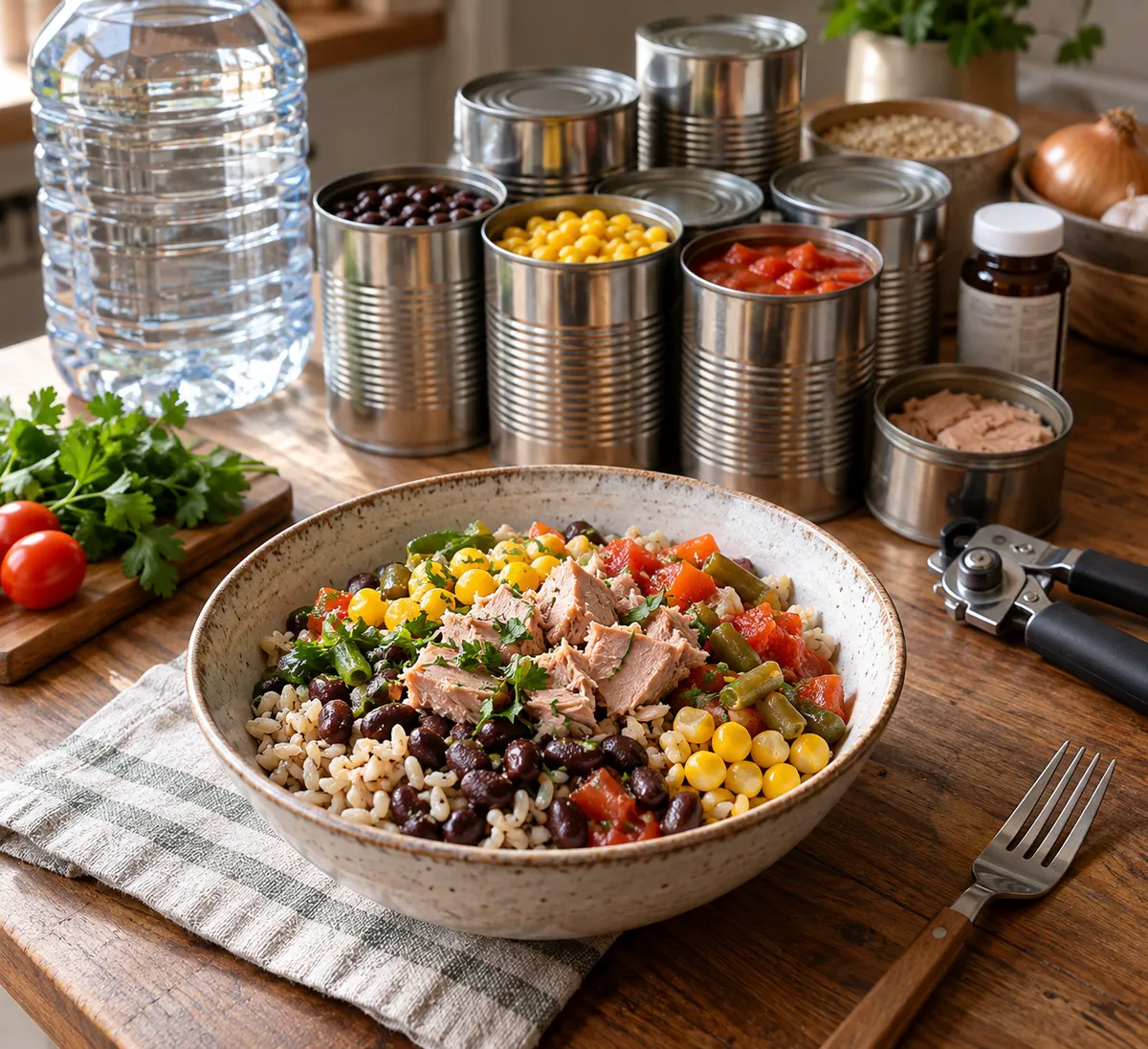
You don't need recipes so much as a formula. Combine three parts:
- A protein: from your canned or shelf-stable stock.
- A whole-grain carb: a dry grain or similar staple.
- A vegetable: from your canned selection.
Season with things you already enjoy. A grain base topped with a protein and a spoonful of vegetables is a complete plate, and you can rotate the combinations through two weeks without much repetition.
How to Shop It
Two weeks is a sensible target to build toward, and you can get there gradually. Add a few items to each regular shop rather than buying everything at once, which spreads the cost and suits tighter budgets. Then:
- Buy foods you will actually eat, so you can rotate stock into everyday cooking.
- Check labels for salt and look for whole-grain and higher-fiber options.
- Store everything together where you can find it quickly, with the can opener and water.
- Review it every few months and eat the older items first.
The Takeaway
This week, pick one shelf in your kitchen and make it your emergency pantry: add a protein, a whole grain, a canned vegetable, some water, and a can opener. Build from there, one shop at a time.