
Robert F. Kennedy Jr. and Dr. Mehmet Oz say 250 U.S. hospitals have joined a voluntary federal pledge to improve the nutrition of the meals they serve, according to a Fox News opinion piece the two wrote. The goal, as they describe it, is food that supports healing, with less processed food and less added sugar. Here is what that means in practice, and how you can borrow the idea for a recovering family member or your own table.
What the pledge is, and what we know
The effort is called the Make Hospital Food Healthier Pledge. Per Fox News, it is voluntary rather than a government mandate, and it asks participating hospitals to cut processed food and added sugar from patient meals. Kennedy and Oz frame it as part of the administration's "Make America Healthy Again" push, tying food quality to chronic disease, recovery and healthcare costs.
The piece also argues that hospitals are powerful buyers. If hundreds of institutions change what they purchase, the authors suggest, suppliers could be nudged toward more whole, minimally processed foods. That is their argument, and how much it changes supply chains remains to be seen. The material we have does not detail specific menu changes, standards or how compliance will be measured, so treat those as open questions.
Why hospital food is a fair target
A hospital is a place where people are told to eat better, yet the tray in front of them doesn't always match that advice. That tension is one of the central points raised in the debate. Voluntary pledges versus mandates is the other: a pledge is flexible and fast to sign, but it leaves the details to each hospital.
What a recovery-minded tray could include
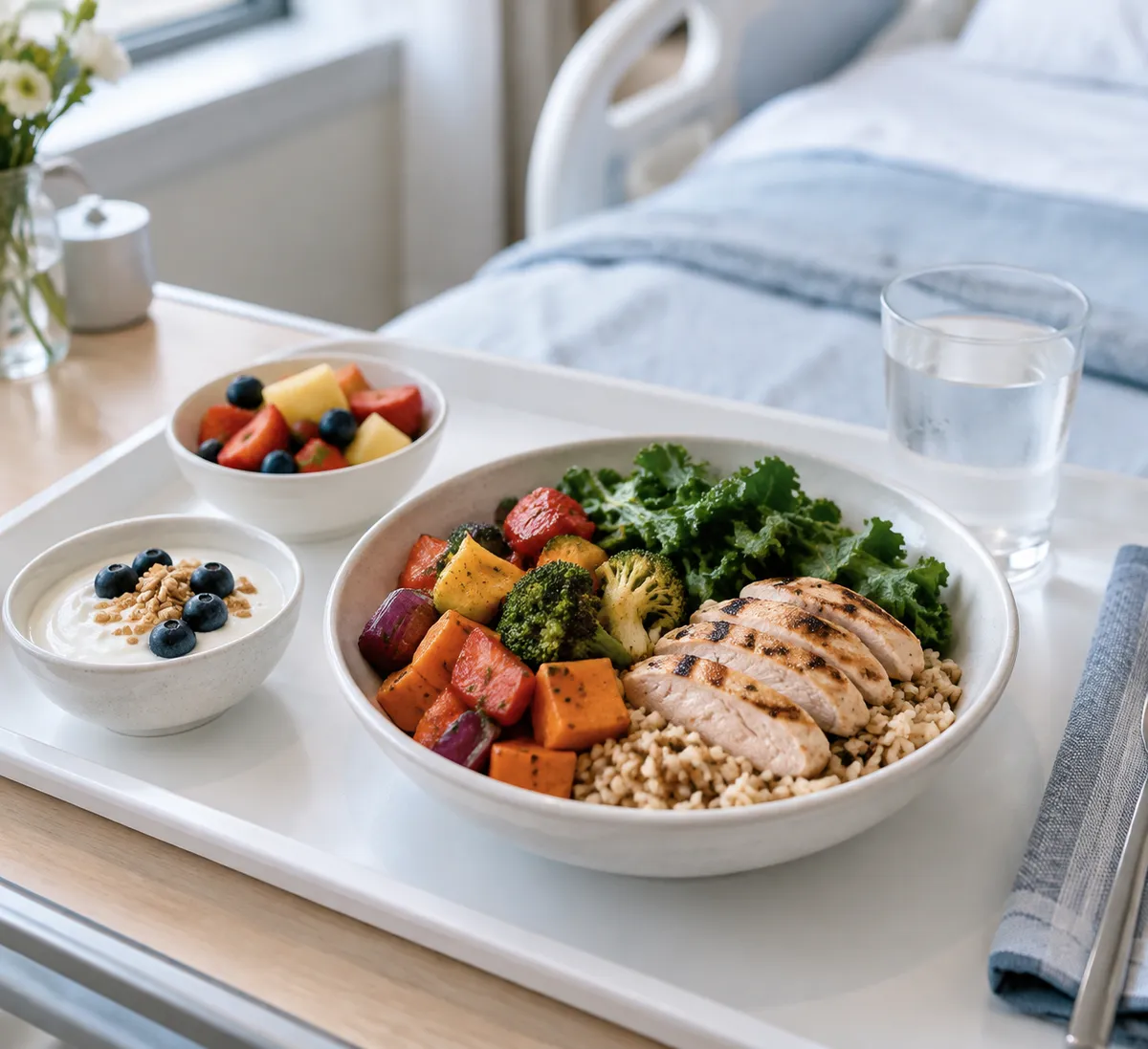
The pledge's stated direction is whole, minimally processed food with little added sugar. Translating that into a tray is our own interpretation, not a published standard:
- A real protein: roasted chicken, baked fish, eggs, beans or lentils rather than formed or heavily breaded products.
- Vegetables you can recognize: steamed green beans, roasted carrots, a simple salad.
- Whole-food carbohydrates: brown rice, oats, potatoes with skins, whole-grain bread.
- Fruit as dessert: baked apple, sliced pears or berries instead of sweetened gelatin cups or syrupy fruit.
- Drinks without added sugar: water, milk, unsweetened tea, instead of juice cocktails or soda.
If a loved one is on a medical diet, check with their care team first. Restrictions for conditions like diabetes, swallowing problems or kidney disease come before any general advice.
A simple recipe: one-pan chicken, carrots and rice
This is a gentle, whole-food dinner that fits the spirit of the pledge. It is an original, approachable recipe, not one tied to the announcement.
Serves 4 | About 45 minutes
- Heat the oven to 400°F (200°C).
- Toss 4 bone-in chicken thighs and 4 sliced carrots with 1 tablespoon olive oil, salt, pepper and a teaspoon of dried thyme on a sheet pan.
- Roast 35 to 40 minutes, until the chicken reaches 165°F (74°C) inside and the carrots are tender.
- Meanwhile, cook 1 cup brown rice according to package directions.
- Squeeze lemon over everything and serve with the pan juices spooned over the rice.
No sauce from a packet, no sugary glaze, and leftovers reheat well for the next day's lunch.
Read labels the way a hospital buyer might
If hospitals are going to cut processed food and added sugar, the same checks help at home:
- Look for "added sugars" on the Nutrition Facts label, and compare brands of the same product.
- Favor short ingredient lists you can read aloud.
- Buy plain versions of yogurt, oatmeal and canned beans, then add your own fruit or spices.
What to watch next
Two things will tell us whether this matters. First, whether hospitals publish what they actually changed on their menus. Second, whether the buying power Kennedy and Oz describe shows up in what suppliers offer. Until then, the most practical move is the one in your own kitchen: next time someone you love is recovering, build the tray around whole foods, and ask the hospital what is on theirs.