Americans aren't drinking much more coffee than they used to. They're getting a lot more calories from it. A new study, reported by Healthline, found that coffee consumption among U.S. adults stayed stable between 2003 and 2018, while calories from coffee beverages climbed nearly 40%.
The main driver, per the report, is non-dairy creamer. Its contribution rose from 7.7 to 18.5 calories per day, more than doubling. This guide shows you how to spot those add-ins in your own cup and which swaps keep the flavor without the creep.
What the Study Actually Found
The numbers are small per day but telling over time:
- Coffee drinking among U.S. adults was steady from 2003 to 2018.
- Calories from coffee beverages rose nearly 40%.
- Calories from non-dairy creamer went from 7.7 to 18.5 per day.
Those are averages, so your own cup may look very different. The takeaway is the direction: the coffee itself didn't change, what people put in it did. Healthline notes that more than 60% of Americans drink coffee daily, so even modest shifts add up across a lot of cups.
Why Creamer Slips Under the Radar
Black coffee is nearly calorie-free, so it's easy to think of any coffee as a light choice. Add a pour of flavored creamer and your morning drink starts behaving more like a dessert. That's my read of the trend, not a finding from the study, but it fits the pattern: the habit feels like "just coffee," so nobody counts it.
Non-dairy creamers are also everywhere now, in grocery aisles and coffee shops, which makes them an easy default. A few seconds with the label tells you more than the front of the bottle does.
How to Read a Creamer Label in 30 Seconds
- Check the serving size. Many people pour more than the listed amount, so multiply accordingly.
- Look at calories per serving. Then think about how many servings go into your cups each day.
- Scan for added sugars. Sweetened and flavored versions are where calories tend to build.
- Read the ingredient list top to bottom. Ingredients are listed by amount, so if sugar or oil sits near the top, that's most of what you're pouring.
- Compare two brands side by side. The plain version of the same product is often noticeably lighter than the flavored one.
Easy Swaps That Keep Coffee Tasting Good
You don't have to go fully black. Try these in order of effort.
Cut back gradually
Pour a little less creamer each week. Your palate adjusts more than you'd expect when the change is slow.
Switch to plain milk
A splash of plain milk gives you the creaminess without a flavored, sweetened base. Choose the dairy or plant milk you like, and check that the plant version is unsweetened.
Add flavor with spices
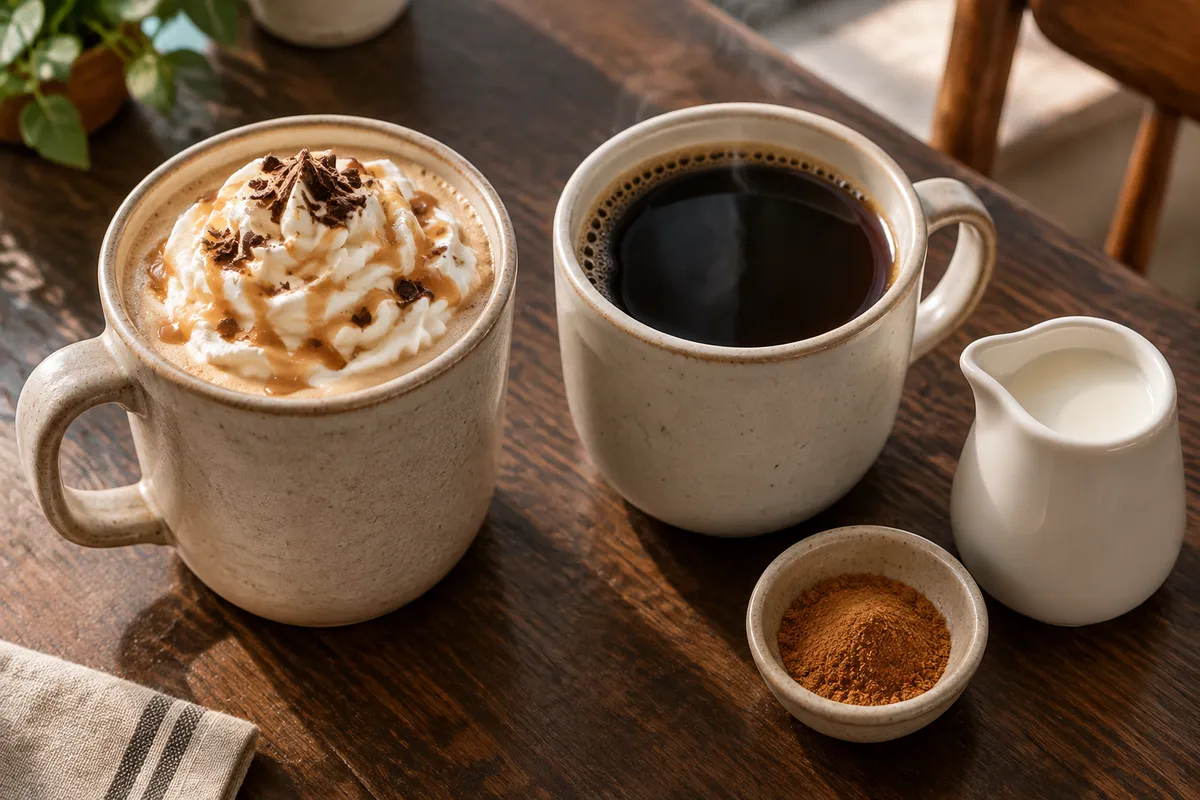
A shake of cinnamon stirred into the grounds before brewing gives the cup a sweet-smelling warmth with no sugar. It's a simple way to replace the "flavored" part of flavored creamer.
Try chicory root
Chicory root is a classic coffee companion, with a roasted, slightly bittersweet depth. Blending a little into your grounds can make coffee taste fuller, so you may miss the creamer less.
A Simple Cinnamon Coffee Recipe
This is an easy, no-fuss way to build flavor without a creamer.
You'll need:
- Your usual ground coffee
- Ground cinnamon
- Plain milk of your choice (optional)
Steps:
- Add your normal amount of grounds to the filter or brewer.
- Stir in a small pinch of cinnamon, about 1/4 teaspoon per few scoops, and adjust to taste.
- Brew as usual.
- Add a small splash of plain milk if you like, tasting before you add more.
For a chicory version, replace a small portion of your grounds with ground chicory root and keep the cinnamon if you enjoy it.
Why Plainer Coffee Is Worth Reclaiming
Healthline's coverage points to black coffee's documented health benefits, including links to cardiovascular health, diabetes and cancer prevention. Those associations apply to coffee itself, and the concern raised here is that heavy add-ins can work against what makes the drink appealing from a health standpoint. Ask your doctor or a dietitian if you have specific health goals or conditions.
Your Next Step
Tomorrow morning, read the label on whatever you pour into your coffee and measure one serving. Then cut it by a third, add a pinch of cinnamon, and see whether you notice.