Maria Pasquale, author of "How to be Italian", has shared 15 tips for travelling Italy like a local, published by Qantas. The advice covers slowing down, leaving the tourist hotspots and doing as the Romans do. Many of those tips land squarely at the table. This guide pulls out the food-related ones and turns them into things you can actually do on a trip: where to spend your time, how to set your daily rhythm, and how to order with more confidence.
The list itself is broader than food, and I'm sticking to what it supports. Where I add practical suggestions, they're my own take, not Pasquale's words.
Follow Italian dining rhythms
One of Pasquale's tips is to follow Italian dining rhythms. The practical meaning: let meal times shape your day instead of squeezing meals around sightseeing. Plan your big stops around lunch and dinner, and treat them as events rather than refuelling.
A simple way to apply this: pick one meal a day as the anchor, book or aim for it, and build the rest of the itinerary loosely around it. Check local opening hours when you arrive, since small restaurants often keep their own schedules.
Make time for coffee culture
Coffee culture is on Pasquale's list, and it's the easiest local habit to adopt. Treat a coffee stop as a short ritual in its own right, not something to carry out the door while you rush to the next sight.
Try this:
- Stop at a neighbourhood café rather than one beside a major landmark.
- Take a few minutes there instead of walking and sipping.
- Go back to the same place on consecutive days. This ties into another of her tips, connecting with locals through daily rituals, because repetition is how a place starts to recognise you.
Visit markets and small food shops
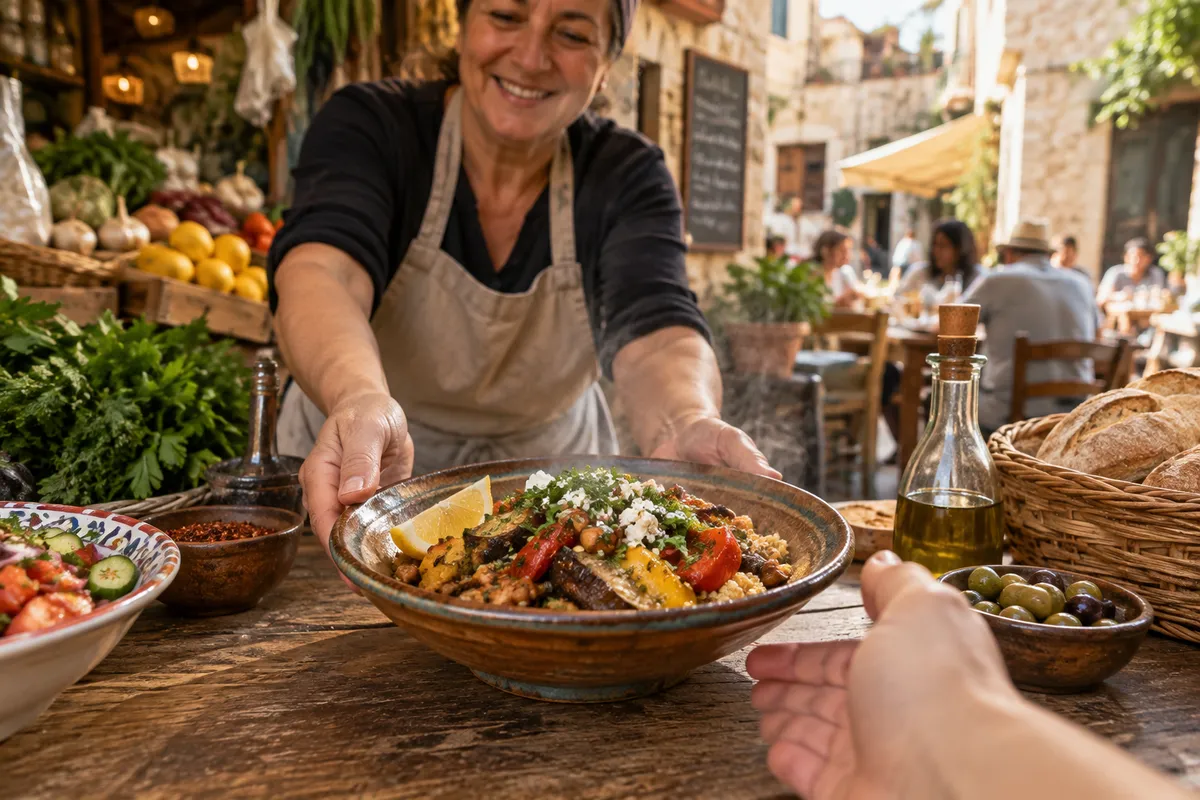
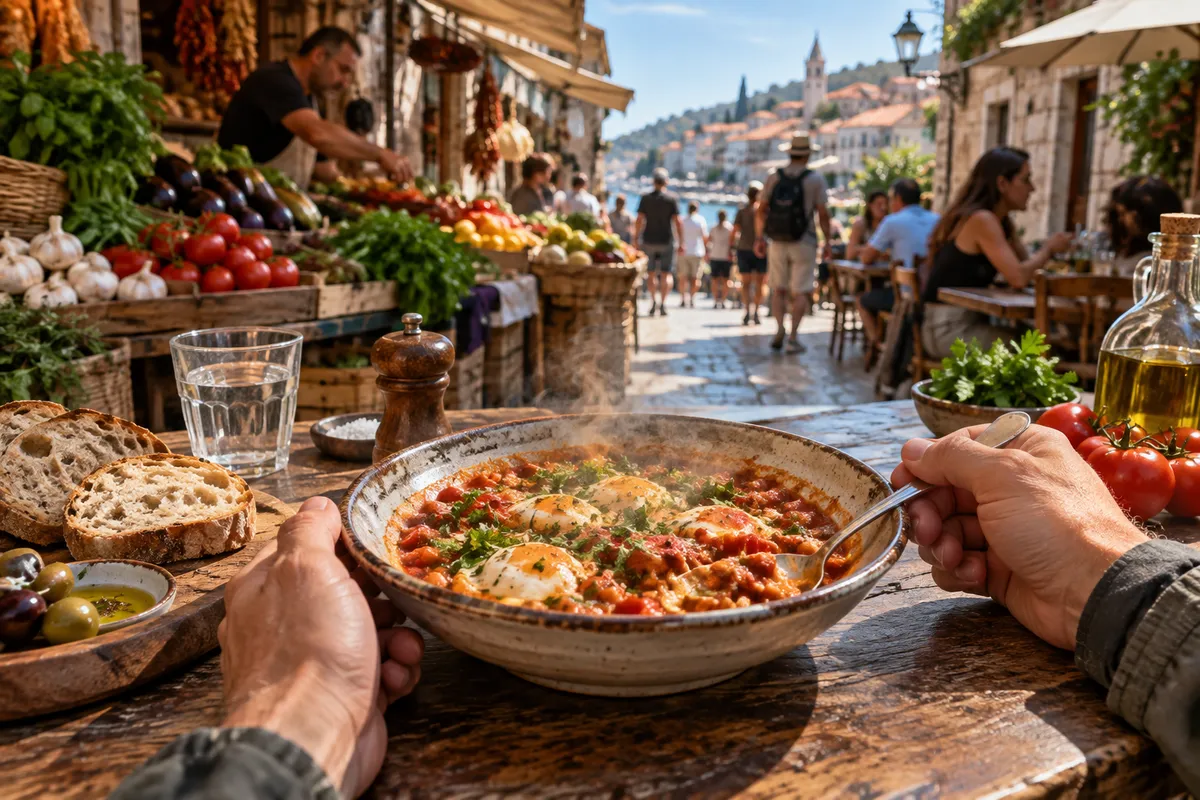
Pasquale recommends visiting markets and small food shops. They're useful for three reasons: you see what's local, you can eat cheaply and casually, and you spend time in a real neighbourhood rather than a tourist strip.
A good market or shop visit can be a picnic plan. Wander, look at what's on offer, and assemble a simple lunch. Learning a few Italian phrases, another of her tips, helps here. Greetings, thank-yous and basic ordering words go a long way in a small shop.
Choose regional dishes
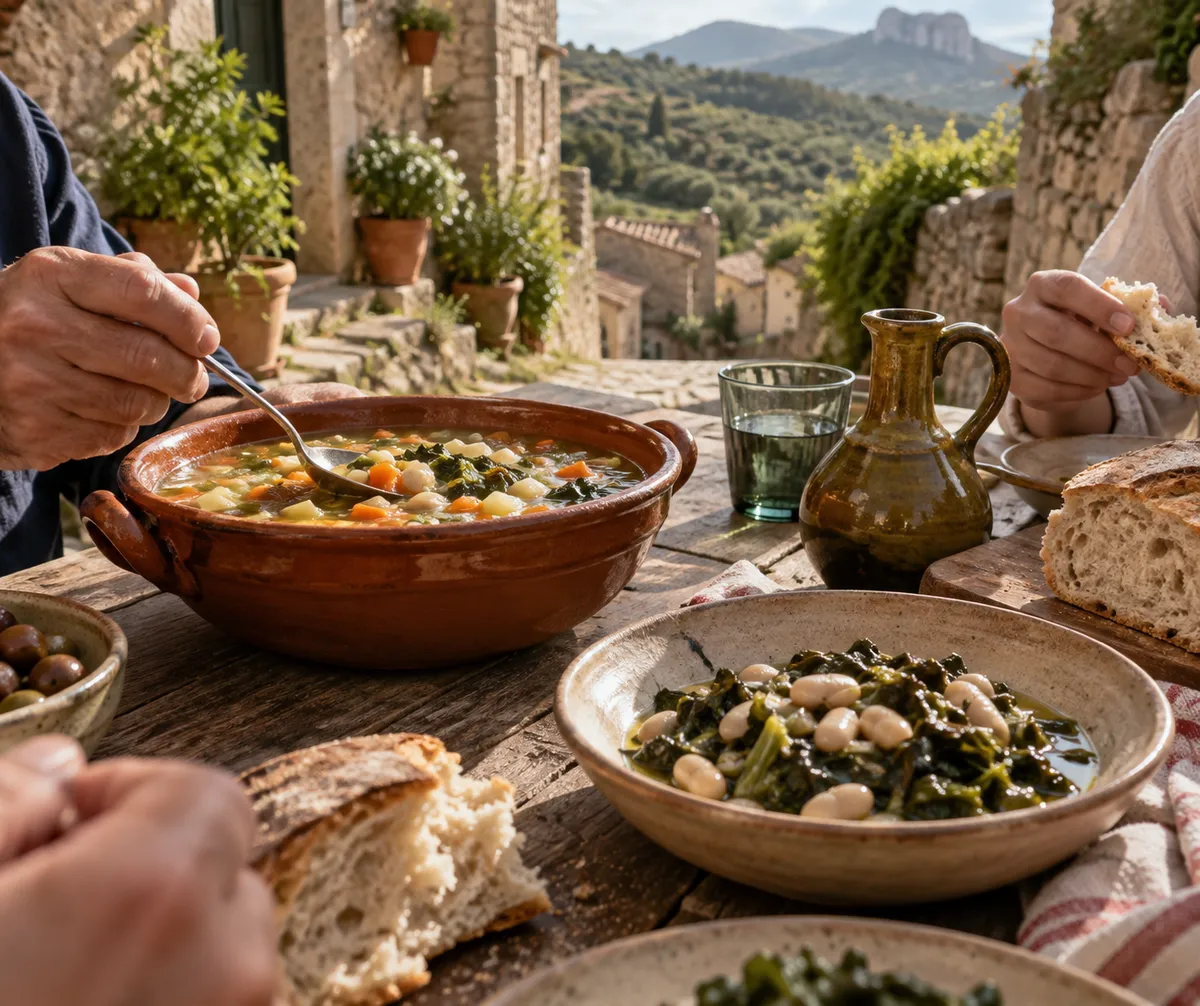
Another tip: choose regional dishes. Italy's food changes from place to place, so the smartest ordering strategy is to eat what the area you're standing in is known for, rather than defaulting to a familiar menu favourite.
How to do it without guesswork:
- Before you travel, look up two or three specialities of each region on your route.
- Ask staff what they'd recommend from the local repertoire.
- Be suspicious of menus that try to cover every Italian dish at once. That's my rule of thumb, not part of Pasquale's list, but it's a handy filter.
This also pairs with exploring beyond the big cities. Smaller towns and less-visited regions are where regional cooking tends to feel least filtered for visitors.
Embrace the passeggiata
The passeggiata, the leisurely stroll, is on the list, and it has a natural place in the food day. A walk before or after a meal is part of the rhythm: unhurried, social and unscheduled.
You don't need a destination. Pick a pleasant street in a local neighbourhood, walk slowly, and let a gelato, an aperitivo or simply window-shopping fill the time. This works best when you resist over-planning every hour, which is another of Pasquale's tips.
Spend time in local neighbourhoods
Spending time in local neighbourhoods is the thread that links the rest. The places where you eat, shop and have coffee shape your whole impression of a city. Choose one residential area per stop and make it your home base for meals. You'll see everyday life instead of a performance for visitors.
Slow down, and take the train
Two of Pasquale's broader tips support all of the above. First, slow down your itinerary. Fewer stops means more time at the table. Second, travel by train where possible. Beyond being a relaxed way to move, it makes visiting smaller towns easier, which feeds directly into eating regionally.
The context matters too. Per the Qantas piece's framing, travellers increasingly want slower, more authentic trips as overtourism reshapes popular destinations such as Rome, Venice and Florence. Eating in lesser-visited neighbourhoods and towns is one concrete way to spread your impact more gently.
Respect local customs
Respecting local customs is on the list, and dining is where visitors most often meet them. The best approach is observational: watch how locals order, how long they linger and what they eat at different times of day, then follow their lead. If you're unsure, ask politely, using the few phrases you've learned.
A simple one-day food plan
Here's how these tips could combine into a day, built from the list (the structure is mine):
- Morning: coffee at a neighbourhood café, taking your time.
- Late morning: browse a market or small food shop and pick up something local.
- Midday: a relaxed meal featuring a regional dish.
- Afternoon: an unplanned passeggiata, with no checklist.
- Evening: dinner at a pace that matches the locals around you.
Notice what's missing: a packed schedule. That's the point of the advice.
Do as the Romans do
Pasquale's final tip is the summary of the rest: do as the Romans do. For food lovers, that means choosing the local café over the landmark one, the regional dish over the familiar one, and the long meal over the quick stop. Before your next Italy trip, cross one thing off your itinerary and replace it with a market, a neighbourhood lunch or a slow walk.