Fox News reports that National Geographic researchers are studying Bolotana, a small village in Sardinia, as a potential new "blue zone." The numbers behind the interest: 10 centenarians among 2,262 residents. By the end of this article, you'll know the three everyday habits highlighted there and how to build the food side of them into an ordinary week, no flight to Italy required.
One caution first. Bolotana is still described as a potential blue zone, and the research is ongoing. Treat what follows as inspiration drawn from a village's daily rhythm, not a guaranteed formula for a long life.
The three habits, in brief
Per the Fox News report, the everyday habits tied to Bolotana's long-lived residents are:
- Constant, natural movement
- A mostly plant-based diet
- Strong social connection
Notice what's missing: supplements, tracking apps, punishing workouts. The appeal of the story is that health here looks like a byproduct of how daily life is arranged, shaped by environment, community, and food culture rather than willpower alone.
Habit one: movement that isn't a workout
The habit described is constant natural movement, meaning activity woven through the day. You can borrow that idea without a hillside village:
- Walk your errands. Pick one regular trip, such as the bakery, the pharmacy, or the market, and do it on foot.
- Make the kitchen do some work. Chopping vegetables, soaking beans, and stirring a pot all keep you on your feet.
- Remove a convenience. Park farther away or take the stairs. Small friction adds movement without adding a "workout" to your calendar.
A scheduled gym session is easy to skip. A walk you need to take to get dinner ingredients is harder to skip.
Habit two: a mostly plant-based table
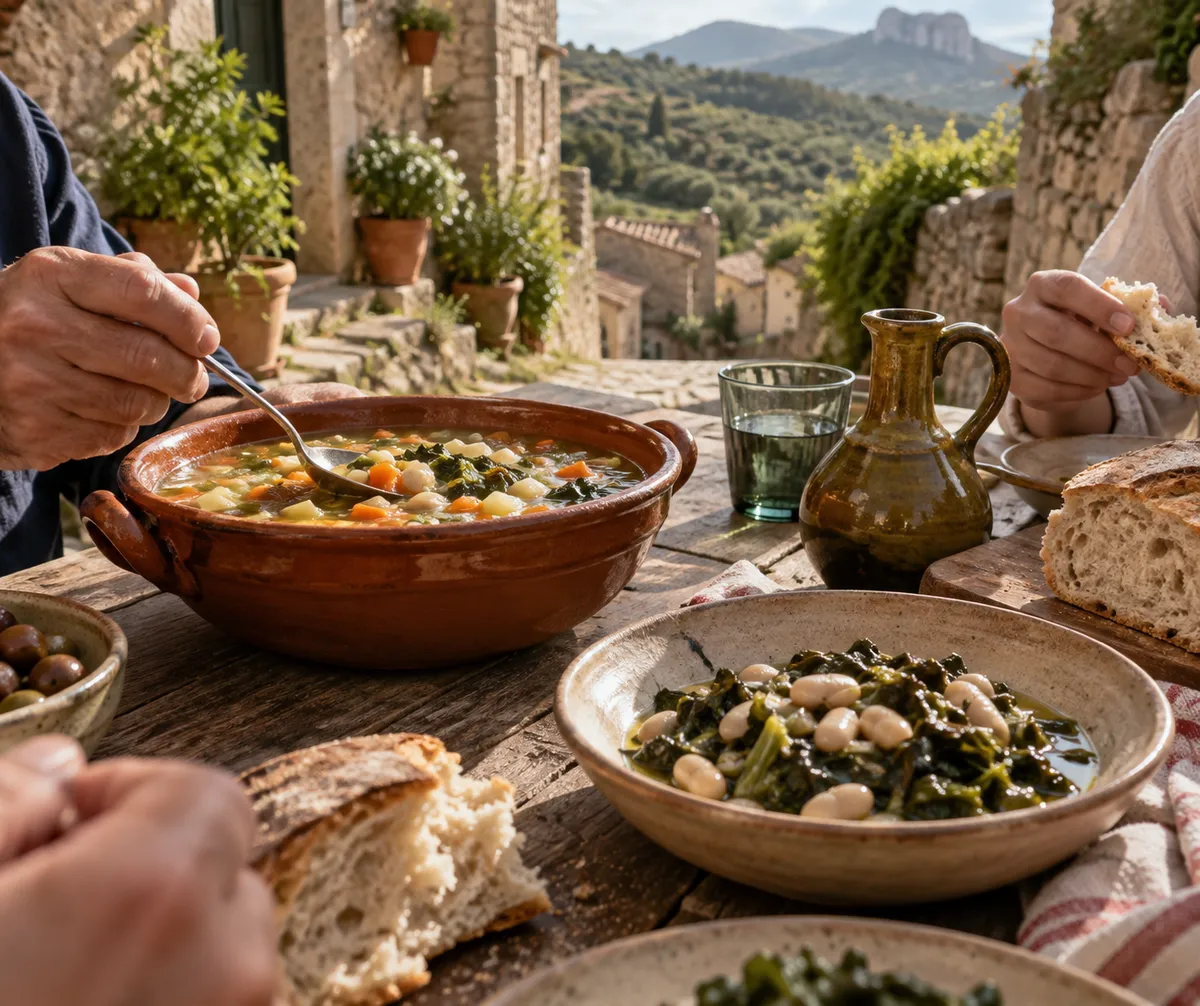
This is where a food site gets to have fun. The reported diet in Bolotana is mostly plant-based. Key angles in the coverage point to beans, olive oil, and minestrone as the heart of that story. I can't tell you exactly what each household cooks, and I won't invent it, but those three ingredients make a sensible, approachable template.
Why "mostly" matters
Mostly plant-based is not the same as strictly vegan. You don't need to overhaul your kitchen. Aim to make beans, vegetables, and olive oil the default on your plate and treat other foods as supporting players.
A simple bean-and-vegetable minestrone
This is a general, home-style minestrone inspired by the ingredients named above, not a documented Bolotana recipe. Serves 4.
You'll need:
- 3 tablespoons olive oil
- 1 onion, 2 carrots, and 2 celery stalks, diced
- 2 cloves garlic, chopped
- 1 can (about 400 g) tomatoes, or 2 fresh chopped tomatoes
- 1 can cooked beans (white or borlotti), drained, or about 1½ cups cooked from dried
- 1 potato or a handful of small pasta
- 1 to 2 cups chopped seasonal greens, such as cabbage or chard
- 5 cups water or vegetable broth
- Salt and pepper
Method:
- Warm 2 tablespoons of the olive oil in a large pot. Cook the onion, carrots, and celery over medium heat for about 8 minutes, until soft.
- Add the garlic and cook for one minute.
- Stir in the tomatoes, beans, potato or pasta, and water or broth. Simmer for 20 to 25 minutes, until the potato is tender.
- Add the greens and cook 5 more minutes.
- Season, then finish each bowl with a drizzle of the remaining olive oil.
Make a big pot and you have lunches ready for several days. That's the point: when a good meal is already waiting, the healthy choice is the easy one.
Easy ways to put beans in your week
- Soup on one night, a warm bean salad with olive oil on another.
- Mash beans on toast with olive oil and a pinch of salt.
- Stir a handful into any vegetable soup or pasta.
Habit three: eat and live alongside other people
The third habit, strong social connection, is the one most people skip when they plan a healthier lifestyle. The coverage frames it as a real part of the picture, alongside food and movement.
Food is the easiest way in:
- Cook a pot of soup and share it. Minestrone scales well, and a neighbor or relative gets a bowl.
- Set a recurring meal. A standing weekly dinner with friends or family is easier to keep than occasional plans.
- Combine habits. Walk to a friend's place, or walk to the market together, and you've covered movement and connection in one outing.
Building a Bolotana-style week
You don't need to do everything at once. A realistic starting plan:
- Monday: Cook a large pot of bean and vegetable soup.
- Wednesday: Walk to pick up fresh vegetables for the next meal.
- Friday or Sunday: Share a meal with someone, and bring leftovers if you're a guest.
Three small actions, one for each habit. Repeat them for a month and see what has become automatic.
What this story can and can't tell you
The reported numbers are striking, but a village being studied as a possible blue zone is not proof that any single dish or routine causes long life. What's useful is the pattern: people who move, eat mostly plants, and stay connected, in a setting that makes those things routine. That's a pattern you can copy in part, whatever your kitchen or neighborhood looks like.
This week, soak or open a can of beans, make one big pot of soup, and invite someone to share it.