A scientific review has found that vanillin, the compound responsible for vanilla's flavor and scent, may have potential in wound-healing materials. That headline is easy to misread, so here is the practical payoff: by the end of this article you'll know what the research suggests, why it doesn't mean you should dab vanilla extract on a cut, and how to think about the bottle in your pantry.
What the review actually suggests
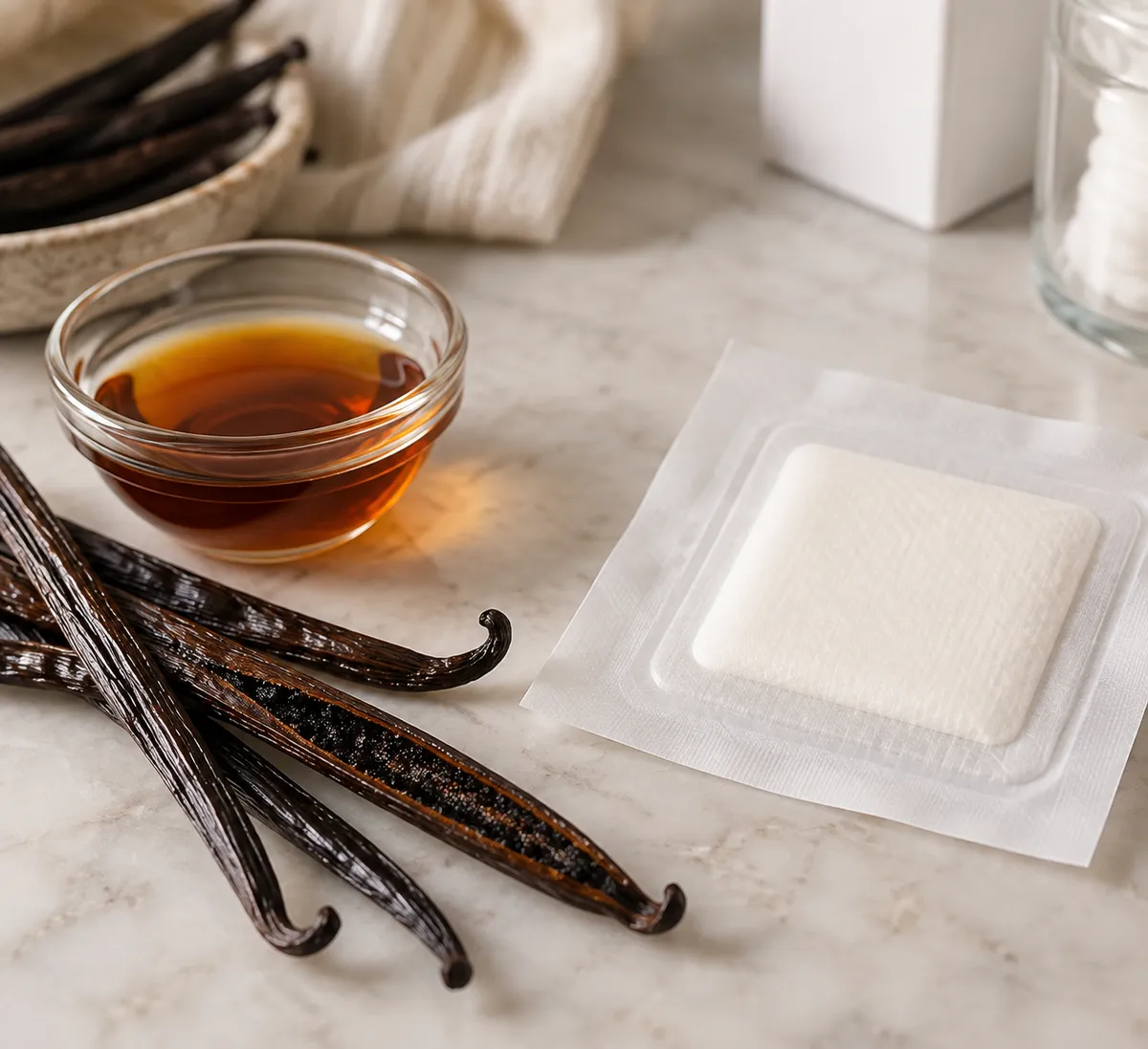
Per Women's Health, the review points to vanillin's antioxidant, anti-inflammatory, and antibacterial properties as the reason it could be useful in wound-healing materials. The key word is materials. The interest is in designing dressings and similar products that incorporate the compound, not in treating injuries with a kitchen ingredient.
That distinction matters. Researchers are looking for affordable, accessible ways to improve wound care, and familiar food and scent compounds are being re-examined for medical uses. Vanillin fits that pattern: it's well known, widely available, and now being looked at for what it might do beyond flavoring a cake.
Vanillin vs. vanilla extract: not the same thing
This is where most of the confusion starts.
- Vanillin is a single compound. It's the main driver of vanilla's recognizable flavor and aroma.
- Vanilla extract is the pantry product you bake with. It's a food ingredient made for flavor, not a medical formulation.
The review's promise relates to vanillin in carefully designed materials. Women's Health stresses that this does not mean vanilla extract should be applied to cuts, since any real wound-care product would need to be medically designed and tested. A compound showing promise in a lab-oriented context is a long way from a safe, effective, tested product.
Why you shouldn't treat this as a home remedy
The reasoning is straightforward:
- The research points to future materials. It describes potential, not a proven treatment.
- Formulation matters. A medical dressing has to be designed and tested. A bottle made for baking hasn't been.
- Wound care already has reliable basics. If you have a cut, stick with the standard approach and ask a pharmacist or doctor if you're unsure how to care for it.
Keep the extract for what it does well: making your food taste better.
Why flavor molecules show up in medicine research
Plant-derived compounds often do more than taste or smell good. Vanillin is a neat example because the three properties highlighted in the review, antioxidant, anti-inflammatory, and antibacterial, line up with things a wound needs help with. That's why scientists are interested in whether it could be built into a dressing or similar material.
It also taps into a wider wellness conversation about everyday ingredients having unexpected biological effects. That curiosity is healthy. The trick is holding two ideas at once: ingredients can be scientifically interesting, and interesting does not equal ready to use.
How to enjoy vanilla in the kitchen
Since we're in a food space, here are a few easy ways to put your vanilla to work. These are simple flavor pairings, not health claims.
Warm milk or oat milk
Stir a small splash of vanilla extract into warm milk with a little honey or sugar. It's a quick, comforting drink.
Yogurt or oatmeal
A few drops stirred into plain yogurt or a bowl of oats adds a bakery-style aroma without much sweetness.
Fruit
Sprinkle a little over sliced strawberries or peaches with a pinch of sugar. Vanilla's scent does a lot of the work of making fruit taste dessert-like.
Pancake or waffle batter
Add it along with the wet ingredients so it distributes evenly.
Start small. Vanilla extract is concentrated, and a little goes a long way.
The bigger takeaway
This story is a good reminder of how science headlines compress. "Compound in pantry staple may help wound-healing materials" turns into "vanilla heals cuts" in about two shares. The accurate version is more modest and more interesting: researchers see potential in a familiar molecule, and the next steps involve medical design and testing.
So the next time a surprising food-health headline lands in your feed, read for the verbs. "May have potential" is not "should be applied." Keep your vanilla in the baking cabinet, and let the scientists handle the dressings.