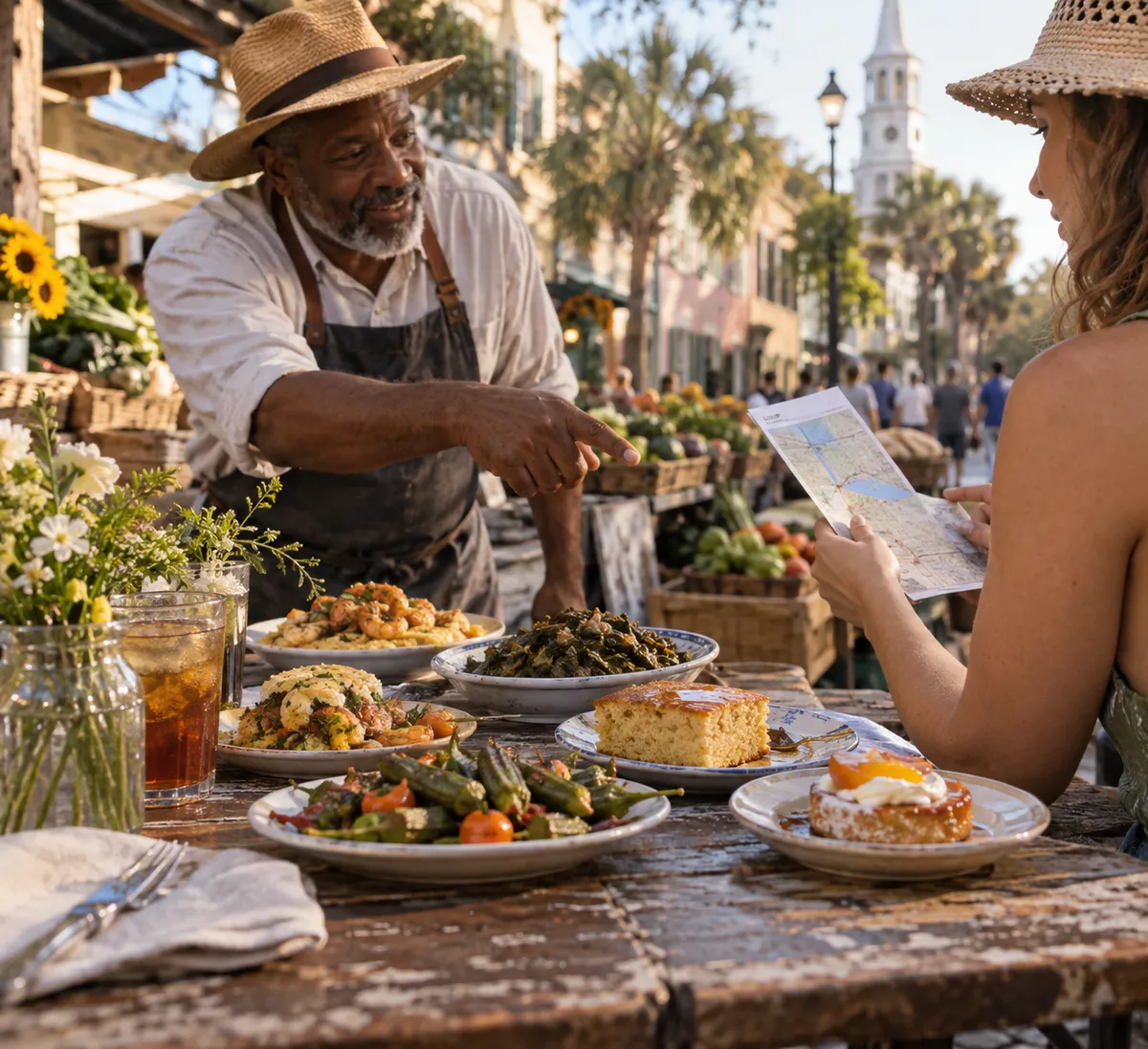
Travel + Leisure recently published a piece in which chef and TV personality Carla Hall shares her favorite Charleston restaurants and the simple strategy she uses to find great food when she travels. This article can't reproduce her full list or her exact wording, because the details of both sit in that original story. What we can do is show you how to plan a taste-led Charleston trip with a chef's mindset, and point you to the source for her specific picks.
Start With the Source
The most reliable way to get Hall's actual Charleston restaurant recommendations is to read the original Travel + Leisure interview. Her named picks and the trick itself are hers to share, and a secondhand summary risks getting them wrong. Treat the article as your starting map, then use the habits below to fill in the gaps.
Why a Chef's Recommendation Is Worth More Than a Star Rating
A chef who travels constantly eats with a trained eye. Reviews often reward polish or hype, while a working cook tends to notice things like whether a kitchen seems confident in its regional dishes. Charleston remains a major culinary destination, per Travel + Leisure's framing, so there is no shortage of options, which makes a trusted filter more useful, not less.
Build Your Own Charleston Food Map
Take the restaurants Hall names and turn them into a plan.
1. Sort by meal, not by name
Place each recommendation into breakfast, lunch, dinner, or a snack stop. Beginners often stack three dinner reservations and leave no room for casual eating.
2. Cluster by neighborhood
Pin every pick on a map. Group stops that sit near each other so you spend your time eating, not in transit.
3. Book the hard ones first
Reserve the dinner spots as soon as your dates are set, then keep lunches flexible. Walk-in meals leave space for discovery.
4. Leave one slot open
Good trips need one unplanned meal. Keep it for a place a local points you toward.
How to Eat Like a Local Anywhere
These habits work in Charleston and elsewhere, and they follow the spirit of a chef-led approach to finding food.
- Ask a specific question. Instead of "Where should I eat?", ask "Where do you go on a regular Tuesday?" People answer honestly when the question is personal.
- Ask people in food-adjacent jobs. Market vendors, bakers, and bartenders spend their days around good ingredients and know where the kitchens care.
- Order the regional dish. When a menu features a local specialty, that's usually where the kitchen's pride lies. In Charleston, that means looking for Lowcountry cooking on the menu.
- Visit at off-peak hours. An early lunch or a late-afternoon snack gives you a calmer room and more conversation with staff.
- Check what's seasonal. A short menu that changes often tends to signal fresh sourcing.
A Simple Lowcountry-Inspired Dish to Cook at Home
If you want to bring the trip home, try a simple shrimp and grits, a dish closely associated with Charleston and the Lowcountry. This is a general home-cook approach, not a recipe from Hall.
You'll need: 1 cup stone-ground grits, 4 cups water or stock, 1 pound peeled shrimp, 3 slices bacon, 2 cloves garlic, a squeeze of lemon, butter, salt, and pepper.
- Simmer the grits in the liquid, stirring often, for 25 to 40 minutes until creamy. Finish with butter and salt.
- Cook the chopped bacon until crisp and set it aside, leaving the fat in the pan.
- Sauté the shrimp in the bacon fat for about 2 minutes per side until pink.
- Add garlic for the last 30 seconds, then finish with lemon.
- Spoon over the grits and top with bacon.
Why Charleston Rewards Planning
Food-driven travel keeps shaping how people choose where to go, according to the framing around Hall's story, and Charleston fits that trend. A small city with a deep dining scene is easy to cover in a long weekend, especially if you plan by meal and neighborhood.
Your Next Step
Open the Travel + Leisure story, copy Hall's picks into a map, and add one habit from the list above: ask a local where they eat on an ordinary weeknight. Then book your first dinner before you book anything else.